Exceptional Culture
How GrowthSpree Earned the Culture Score to Match What It Already Knew
With below-benchmark attrition and a high happiness index across both employees and clients, GrowthSpree set out to prove what it had built. The Agency Workplaces process gave them a credible, third-party lens to do exactly that.
Company
GrowthSpree
Contact
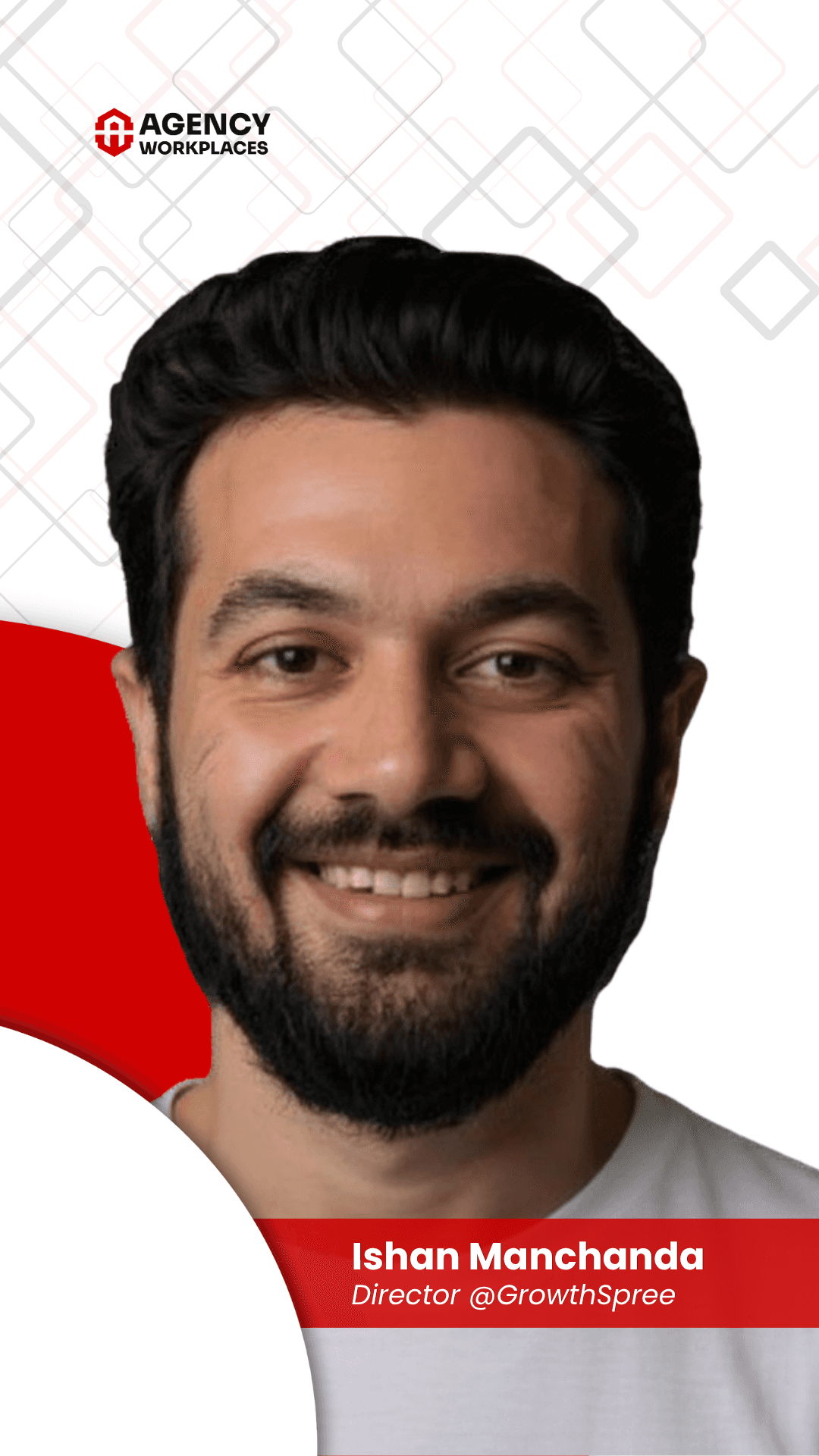
Ishan Manchanda, Director
Industry
Digital Marketing
Location
New York City, USA
Overview
Culture on Two Fronts
For GrowthSpree, culture has never been a single-dimensional concept. It lives on two equally important tracks: how the team treats one another internally, and how they show up for every client they serve.
Internally, a great culture means a workplace where growth is possible, performance is rewarded, and the team feels as close-knit as family. Every person is respected. Hierarchy does not mean distance. That foundation is what Ishan Manchanda, Director at GrowthSpree, has worked to build since the agency's inception five years ago.
Externally, that same culture extends outward. GrowthSpree employees treat each client's business as their own, bringing proactiveness and genuine investment to every engagement. The result: an agency where both the team and the clients have stayed.
Why Agency Workplaces
Making the Invisible Visible
Five years into operations, GrowthSpree had a story worth telling: attrition rates well below industry benchmarks, and a happiness index that reflected well on both employees and clients. The challenge was that this kind of culture is difficult to quantify on your own.
Agency Workplaces offered the credibility to back up what Manchanda already believed to be true. More than an internal assessment, it was a way to show the world, with a recognized third-party stamp, that GrowthSpree's culture was real and measurable.
"Agency Workplaces seemed the best and most credible option to prove and showcase our credibility to the world," Manchanda said.
For a growing agency in a competitive space, that proof point matters
What We Learned
Strong Foundations, Small Gaps
The process surfaced something both affirming and instructive. The team is, overall, happy. That was the primary takeaway, and it was a meaningful one.
But a strong foundation does not mean a finished one. The survey also pointed to small gaps, areas where not every employee feels fully satisfied. For Manchanda, those gaps are not a source of concern so much as a roadmap. The opportunity to act on specific feedback is precisely what makes the process valuable.
Equally important was the recognition that this kind of exercise should not be a one-time event. Giving employees a regular channel to share their experience, and giving leadership a structured way to hear it, is part of what keeps a culture healthy over time.
What's Next
Steps Toward Better
1 | Engage in the AWA leadership training programs to build on the team's current strengths and introduce new frameworks for workplace development. |
2 | Address the specific gaps surfaced through the survey process to ensure every employee reaches full satisfaction, not just the majority. |
Tips for Building Great Culture
Advice From the Field
• Employees and clients both build an agency. While most people think about clients, they often overlook the team behind the work. Put equal weight on both.
• Don't work with clients who don't fit. Misaligned partnerships create friction that ripples inward and affects team culture.
• Trust your team. Confidence in your people is one of the most direct forms of cultural investment.
• Create real opportunities for employees to talk and engage with top management. Accessibility is not a perk; it is a signal that every voice matters.

Other case studies




About Us
At Agency Workplaces, we help agencies build better teams and get officially recognized for their outstanding workplace cultures.



Copyright © 2026 Agency Workplaces - All Rights Reserved